Get the Orvos TED Detector app for Android
Capture TED photos, complete the clinical questionnaire and send them securely to Orvos physicians for review. Validated for the Phelcom Eyer2 and Volk Viva.
The app collects and sends information for physician review. It does not diagnose, interpret images or recommend treatment.
Advanced Screening Services Across the Nation
YOUR EYES ARE OUR PRIORITY
At Orvos Healthcare, we are dedicated to bringing top-quality eye care services directly to healthcare providers across the country. Through our unique network of skilled ophthalmologists, we deliver specialized evaluations with unmatched efficiency, covering the entire United States to make this essential care accessible wherever you are.
Early Detection
Nationwide Services
Complete Care
Veteran Owned & Operated
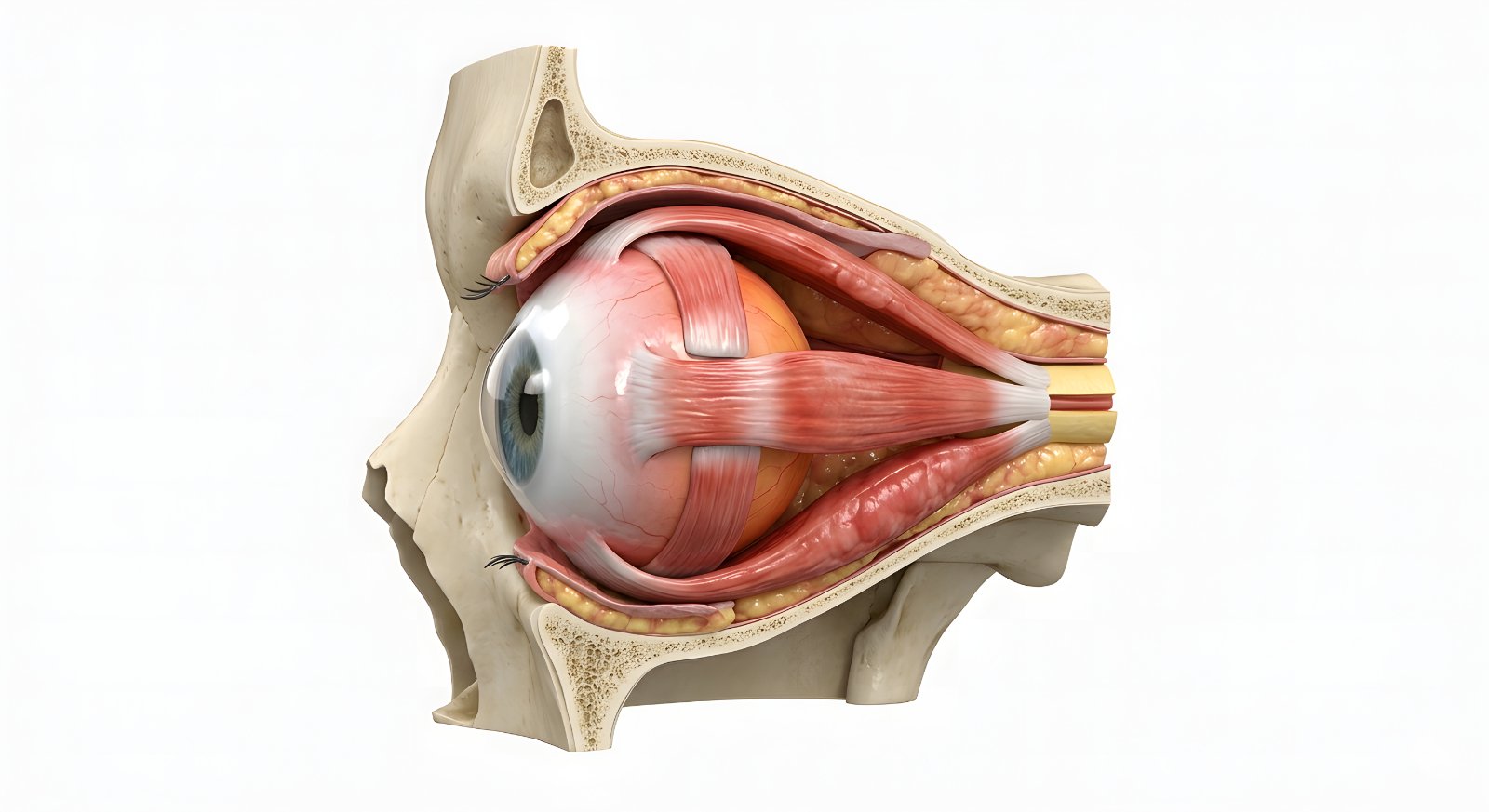
Thyroid Eye Disease
Nationwide Thyroid Eye Disease Evaluation Network
Our team of board-certified ophthalmologists brings extensive clinical experience to every Thyroid Eye Disease evaluation. Each physician is trained to recognize visible signs associated with TED, assess the severity of ocular findings, and identify patients who may require routine monitoring, prompt follow-up, or urgent specialist care.
By combining advanced ocular imaging technology with expert physician oversight, Orvos Healthcare provides a clinically meaningful assessment designed to support endocrinologists, primary care providers, health plans, and other care teams managing patients with thyroid disease.
Our physicians may evaluate images and clinical information for signs such as:
- Eyelid retraction or abnormal eyelid position
- Eye redness and inflammation
- Eyelid or surrounding tissue swelling
- Forward protrusion of the eye, known as proptosis
- Corneal exposure or ocular surface irritation
- Asymmetry between the eyes
- Restricted eye movement or findings associated with double vision
- Changes that may suggest more advanced orbital involvement
Thyroid Eye Disease can range from mild irritation and dryness to more significant swelling, eye protrusion, double vision, and, in severe cases, vision-threatening complications.
Every Orvos report is designed to support informed clinical decision-making. Physicians provide clear findings, severity assessments, and recommended next steps, helping care teams determine whether the patient should continue routine monitoring, receive a comprehensive eye examination, or be referred promptly to an ophthalmologist or other appropriate specialist.
Through partnerships with experienced eye-care professionals, Orvos Healthcare helps expand access to high-quality TED evaluations while preserving the physician judgment, clinical oversight, and accountability patients deserve.

from PIL import Image, ImageDraw, ImageFont

# ---- Canvas + palette ----
W = 1100
navy      = (11, 72, 136)      # #0B4888
head_bg   = (234, 242, 249)    # #eaf2f9
head_tx   = (23, 50, 77)       # #17324d
border    = (214, 224, 232)    # #d6e0e8
alt_row   = (247, 250, 252)    # #f7fafc
white     = (255, 255, 255)
note_bg   = (255, 249, 232)    # #fff9e8
note_bd   = (228, 217, 183)    # #e4d9b7
note_tx   = (91, 103, 112)     # #5b6770
text_col  = (35, 45, 55)

# ---- Fonts (auto-fallback handled by the runner if these paths are missing) ----
bold = "/usr/share/fonts/truetype/dejavu/DejaVuSans-Bold.ttf"
reg  = "/usr/share/fonts/truetype/dejavu/DejaVuSans.ttf"
f_title = ImageFont.truetype(bold, 26)
f_sub   = ImageFont.truetype(reg, 18)
f_head  = ImageFont.truetype(bold, 16)
f_body  = ImageFont.truetype(reg, 16)
f_boldb = ImageFont.truetype(bold, 16)
f_note  = ImageFont.truetype(reg, 15)
f_noteb = ImageFont.truetype(bold, 15)

pad = 14
line_h = 22

# ---- Measuring helpers ----
_m = Image.new("RGB", (10, 10))
_md = ImageDraw.Draw(_m)
def tw(t, f):
    return _md.textlength(t, font=f)

def wrap(text, font, max_w):
    words = text.split()
    lines, cur = [], ""
    for w in words:
        test = (cur + " " + w).strip()
        if not cur or tw(test, font) <= max_w:
            cur = test
        else:
            lines.append(cur)
            cur = w
    if cur:
        lines.append(cur)
    return lines or [""]

# ---- Data ----
rows = [
    ("1", "Do you have aching or pressure-like pain behind either eye?", "Spontaneous orbital pain", "0 or 1"),
    ("2", "Do you have pain when moving your eyes up, down, left, or right?", "Pain with eye movement", "0 or 1"),
    ("3", "Are your eyelids noticeably red?", "Eyelid redness", "0 or 1"),
    ("4", "Are the whites of your eyes unusually red?", "Conjunctival redness", "0 or 1"),
    ("5", "Is there swelling of the clear tissue over the white of the eye, sometimes appearing raised or jelly-like?", "Chemosis", "0 or 1"),
    ("6", "Is there swelling or redness at the inner corner of the eye?", "Caruncle or plica swelling", "0 or 1"),
    ("7", "Are your eyelids swollen, puffy, or unusually full?", "Eyelid swelling", "0 or 1"),
]
interp_rows = [
    ("0\u20132", "Lower evidence of active inflammation", white),
    ("3\u20137", "Possible active thyroid eye disease requiring physician assessment", alt_row),
]
note_runs = [
    ("Clinical note:", f_noteb, head_tx),
    (" Each positive finding receives 1 point. CAS measures inflammatory activity and does "
     "not independently determine overall TED severity. Results should support, not replace, "
     "physician assessment.", f_note, note_tx),
]

# ---- Column geometry (main table) ----
c0 = int(W * 0.06)
c3 = int(W * 0.15)
c2 = int(W * 0.29)
c1 = W - c0 - c2 - c3
X = [0, c0, c0 + c1, c0 + c1 + c2, W]

# ---- Column geometry (interpretation table) ----
a0 = int(W * 0.25)
XA = [0, a0, W]

def cell_lines(text, font, col_w):
    return wrap(text, font, col_w - 2 * pad)

# ---- Pass 1: measure ----
header_h = 82
main_head_h = pad * 2 + line_h

main_meta = []
for num, q, sign, score in rows:
    ql = cell_lines(q, f_body, c1)
    sl = cell_lines(sign, f_body, c2)
    h = pad * 2 + line_h * max(len(ql), len(sl), 1)
    main_meta.append((num, ql, sl, score, h))

gap1 = 22
t2_head_h = pad * 2 + line_h
t2_meta = []
for score, interp, bg in interp_rows:
    il = cell_lines(interp, f_body, (W - a0))
    h = pad * 2 + line_h * max(len(il), 1)
    t2_meta.append((score, il, bg, h))

gap2 = 18
# note box: layout mixed bold/regular runs across lines
def layout_runs(runs, max_w):
    words = []
    for text, font, fill in runs:
        for p in text.split():
            words.append((p, font, fill))
    lines, cur, cur_w = [], [], 0
    space = tw(" ", f_note)
    for word, font, fill in words:
        ww = tw(word, font)
        add = ww if not cur else ww + space
        if cur and cur_w + add > max_w:
            lines.append(cur)
            cur, cur_w = [], 0
            add = ww
        cur.append((word, font, fill))
        cur_w += add
    if cur:
        lines.append(cur)
    return lines

note_pad_x, note_pad_y = 16, 14
note_lines = layout_runs(note_runs, W - 2 * note_pad_x)
note_h = note_pad_y * 2 + line_h * len(note_lines)

total_h = (header_h + main_head_h + sum(m[4] for m in main_meta)
           + gap1 + t2_head_h + sum(t[3] for t in t2_meta)
           + gap2 + note_h + 4)

# ---- Pass 2: draw ----
img = Image.new("RGB", (W, total_h), white)
draw = ImageDraw.Draw(img)

def cell(x0, y0, x1, y1, fill=None):
    if fill:
        draw.rectangle((x0, y0, x1, y1), fill=fill)
    draw.rectangle((x0, y0, x1, y1), outline=border, width=1)

def text_center(cx, cy, t, f, fill):
    w = tw(t, f)
    draw.text((cx - w / 2, cy - line_h / 2), t, font=f, fill=fill)

y = 0
# Header banner
draw.rectangle((0, 0, W, header_h), fill=navy)
draw.text((22, 16), "Orvos Healthcare", font=f_title, fill=white)
draw.text((22, 50), "Thyroid Eye Disease Clinical Activity Score (CAS)", font=f_sub, fill=white)
y = header_h

# Main table header row
for i, label in enumerate(["#", "TED CAS Question", "Clinical Sign Assessed", "Score"]):
    cell(X[i], y, X[i + 1], y + main_head_h, fill=head_bg)
    if i in (0, 3):
        text_center((X[i] + X[i + 1]) / 2, y + main_head_h / 2, label, f_head, head_tx)
    else:
        draw.text((X[i] + pad, y + pad), label, font=f_head, fill=head_tx)
y += main_head_h

# Main table data rows
for idx, (num, ql, sl, score, h) in enumerate(main_meta):
    bg = white if idx % 2 == 0 else alt_row
    for i in range(4):
        cell(X[i], y, X[i + 1], y + h, fill=bg)
    text_center((X[0] + X[1]) / 2, y + h / 2, num, f_boldb, text_col)
    ty = y + pad
    for ln in ql:
        draw.text((X[1] + pad, ty), ln, font=f_body, fill=text_col)
        ty += line_h
    ty = y + pad
    for ln in sl:
        draw.text((X[2] + pad, ty), ln, font=f_body, fill=text_col)
        ty += line_h
    text_center((X[3] + X[4]) / 2, y + h / 2, score, f_boldb, text_col)
    y += h

# Interpretation table
y += gap1
for i, label in enumerate(["Total CAS Score", "General Interpretation"]):
    cell(XA[i], y, XA[i + 1], y + t2_head_h, fill=navy)
    if i == 0:
        text_center((XA[0] + XA[1]) / 2, y + t2_head_h / 2, label, f_head, white)
    else:
        draw.text((XA[i] + pad, y + pad), label, font=f_head, fill=white)
y += t2_head_h

for score, il, bg, h in t2_meta:
    for i in range(2):
        cell(XA[i], y, XA[i + 1], y + h, fill=bg)
    text_center((XA[0] + XA[1]) / 2, y + h / 2, score, f_boldb, text_col)
    ty = y + pad
    for ln in il:
        draw.text((XA[1] + pad, ty), ln, font=f_body, fill=text_col)
        ty += line_h
    y += h

# Clinical note box
y += gap2
draw.rounded_rectangle((0, y, W, y + note_h), radius=6, fill=note_bg, outline=note_bd, width=1)
ty = y + note_pad_y
space = tw(" ", f_note)
for ln in note_lines:
    tx = note_pad_x
    for word, font, fill in ln:
        draw.text((tx, ty), word, font=font, fill=fill)
        tx += tw(word, font) + space
    ty += line_h

img.save("orvos_cas_table.png")
Fast, Reliable Turnaround
Timely evaluation is important when managing Thyroid Eye Disease because symptoms and visible changes may progress and can significantly affect a patient’s comfort, appearance, and vision.
Orvos Healthcare is committed to providing a rapid 24–48-hour turnaround for TED image evaluations. Our streamlined process helps providers identify concerning findings sooner, coordinate appropriate follow-up, and support continuity of care between endocrinology, primary care, and eye-care specialists.
We work closely with imaging technology providers and healthcare organizations to integrate TED evaluations into existing clinical workflows while minimizing the administrative burden on your practice.
Partnering for Better TED Care
Orvos Healthcare partners with advanced imaging technology providers to help practices capture clear, clinically useful images with minimal setup and training.
Our goal is to give providers timely, actionable information while allowing them to remain focused on the patient’s broader thyroid care. Orvos can support practices seeking to:
- Identify visible signs associated with Thyroid Eye Disease
- Document changes in eye appearance over time
- Improve coordination between endocrinologists and ophthalmologists
- Determine when additional ophthalmic evaluation may be appropriate
- Expand access for patients who may not have immediate access to an eye specialist
Choose Orvos Healthcare for nationwide physician expertise, dependable turnaround times, and clinically focused Thyroid Eye Disease evaluation services.
Contact Orvos Healthcare today to learn how TED imaging and physician review can be incorporated into your practice.